


Buy a duplex and you’ll be rich by next week! You can live in one unit and have rent from the other cover much of your mortgage. You’ll build equity faster and get better loan terms as an owner-occupant. It’s practical, but it still needs smart screening, inspections, and budgeting. Want to know the exact steps to buy your first duplex and avoid the biggest pitfalls?
Main Points
- A duplex is one building with two separate, self-contained units, each having its own entrance, kitchen, and bathroom.
- Live in one unit and rent the other to offset mortgage payments, often qualifying you for better owner-occupant loan terms.
- Upfront costs include down payment, inspection/appraisal fees, closing costs, and cash reserves for initial repairs and vacancies.
- Always get a professional inspection to find structural, electrical, plumbing, mold, or pest issues before buying.
- Compare loan types, run cash-flow and cap-rate math, include repair contingencies in offers, and budget 3–6 months of expenses as reserves.
What a Duplex Is and How It Works
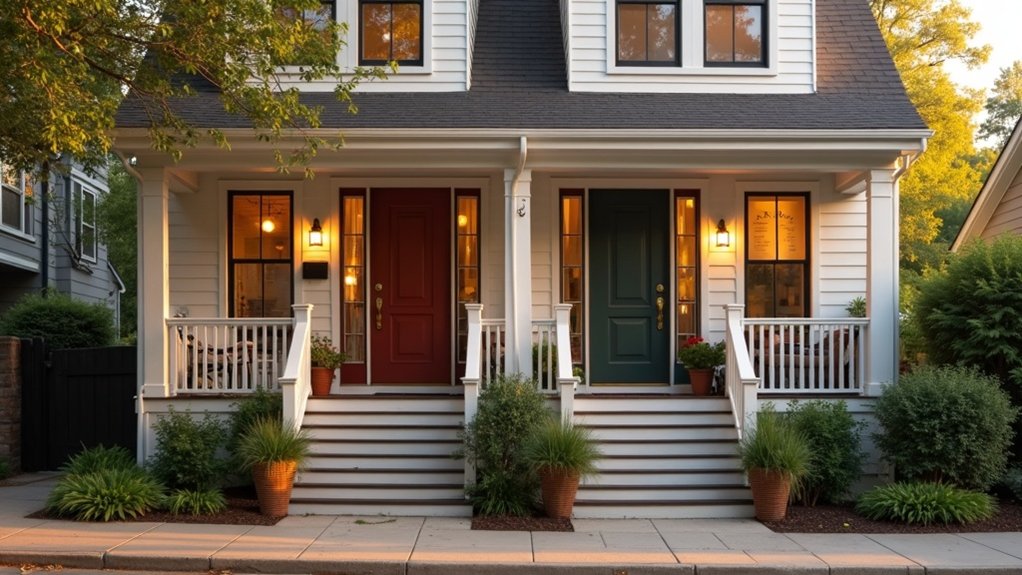
How does a duplex actually work? You’re looking at one building with two separate living units—side-by-side or stacked—each having its own kitchen, bathroom(s), and entrances. You treat each unit like an independent apartment: set up separate leases, screen tenants, and schedule inspections.
Utilities may be separately metered or shared; if shared, you’ll need clear agreements on splitting costs. Zoning and local codes define occupancy limits, parking, and safety features, so check permits before buying.
Maintenance can be handled by you or a property manager; keep a routine for common areas and quick responses to tenant issues. Clear communication, documented rules, and organized records keep both units functional and compliant.
Plan inspections, collect deposits, and document move-in conditions to avoid disputes later, and stay organized.
Financial Benefits of Living in One Unit and Renting the Other
Living in one unit while renting the other can make buying a duplex far more affordable than a single-family home because the rental income directly offsets your mortgage and carrying costs. You can qualify for better financing as an owner-occupant, often with lower rates or smaller down payments, giving you easier access to property ownership. Rental income helps build equity faster since more of each payment goes toward principal over time. You’ll get hands-on control of maintenance and tenant screening, so you can protect value and keep rents competitive. Living next door makes managing issues fast and inexpensive. Over years, appreciation and principal paydown compound into meaningful net worth. That creates options: move, rent both units, or leverage equity for another property safely today.
Upfront Costs, Ongoing Expenses, and Cash-Flow Basics
Buying a duplex means you’ll face upfront costs like a down payment, appraisal and inspection fees, and closing costs, plus cash reserves for immediate repairs and vacancy protection. You should budget for initial repairs, basic furnishing for a rental, and any utility set-ups you’ll cover. For ongoing expenses, track mortgage, property taxes, insurance, utilities, landscaping, and routine maintenance. Create a simple monthly spreadsheet: rent income per unit minus all expenses equals cash flow. Aim for positive cash flow after vacancy and a maintenance reserve—target 5–10% of rent. Factor in property management fees if you won’t self-manage. Review expected yield (annual net income divided by cash invested) to see if returns meet your goals before you buy. Run numbers conservatively and revisit them monthly often.
Common Risks, Inspections, and Maintenance to Watch for
Why do inspections matter? You need inspections to uncover structural, electrical, and plumbing issues that can eat your profits. Hire a qualified inspector, attend the walkthrough, and get a written report. Prioritize safety items—roof, foundation, mold, HVAC—and estimate repair costs before you commit.
Know common risks: deferred maintenance, hidden water damage, pest infestation, and tenant-caused wear. Budget a reserve equal to 3–6 months of expenses for surprises. Schedule routine maintenance: gutter cleaning, HVAC servicing, smoke-detector checks, and exterior painting to prevent bigger failures. Keep clear repair records and require move-in/move-out inspections with documented checklists. If repairs are beyond your skillset, get licensed contractors and multiple bids so you won’t overpay or end up with shoddy work. Review insurance coverage to match property risk levels.
How to Finance, Find, and Close Your First Duplex
How will you finance, find, and close your first duplex without surprises? Start by getting pre-approved for a mortgage, compare FHA, conventional, and portfolio loans and know down payment and reserve requirements. Work with an agent who knows multifamily listings, scout neighborhoods, and analyze rent comps. Run numbers: cap rate, cash-on-cash, vacancy buffer, and realistic repair estimates. Arrange inspections early and include repair or credit contingencies in your offer. Shop mortgage rates, lock once satisfied, and prepare proof of funds for earnest money. Before closing, get title insurance, confirm utilities and insurance, and do a final walk-through. Plan move-in logistics, transfer leases, and keep a closing folder with all documents for quick reference. Ask your lender; you’re eligible for grants, tax breaks, owner-occupant advantages.
Frequently Asked Questions
How Do Duplexes Affect My Property Taxes Long-Term?
You’ll likely see higher assessed value and taxes after converting or buying a duplex, but you can appeal assessments, claim exemptions, document income-producing use, and budget for long-term increases to protect cash flow and returns.
Can I Convert a Duplex Into Separate Legal Units Later?
Yes, you’ll usually be able to convert it later, but will you check zoning, permits, inspections, and upgrade utilities? Start by researching codes, hire an architect or contractor, and plan paperwork, timeline, and realistic budget.
What Insurance Differences Exist for Duplexes Versus Single-Family Homes?
You’ll need different, adequate coverage: landlord or dwelling‑fire policies for rental units, higher liability limits, vacancy or loss‑of‑rental‑income riders; premiums can be higher than a single‑family policy, so get quotes and require tenant renters’ insurance.
How Do Local Zoning Laws Limit Duplex Modifications or Additions?
Zoning restricts duplex modifications by dictating allowed uses, setbacks, height, lot coverage, unit density, parking, and occupancy; you’ll need permits, meet building codes, pursue variances or rezoning if necessary, and consult your local planning office.
What Landlord-Tenant Legal Obligations Apply in My State?
You’re required to follow state laws on lease terms, security deposit limits, habitability and repair duties, eviction procedures, anti-discrimination rules, notice periods, and privacy/entry rights; check your state statutes and also consult an attorney today.
Read The Next Blog Post –
Think of a duplex as a sturdy canoe you steer yourself: you live in one seat, rent the other to paddle you forward, and you share the load so storms feel smaller. You’ll check for leaks, patch the hull, and balance expenses like cargo. Start with clear contracts, realistic budgets, and basic inspections. If you steer steadily, your investment will carry you farther than renting ever could. Prepare, act, and watch equity grow into freedom.


