

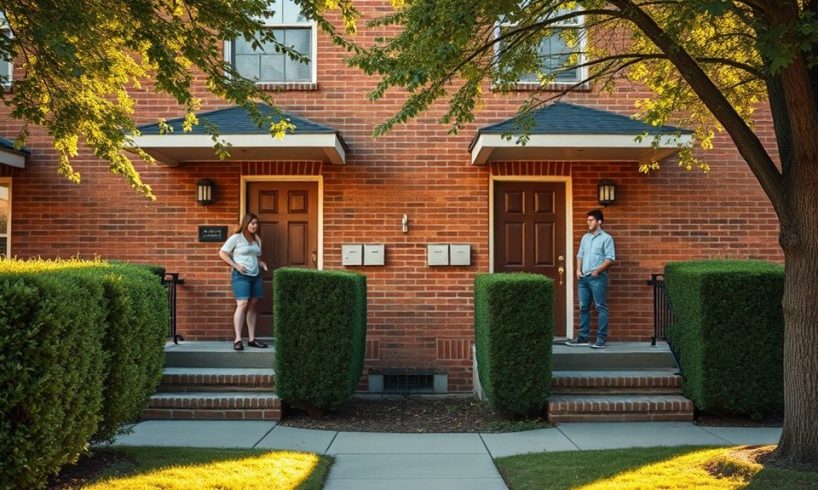
You’ll find duplexes let you live in one unit while renting the other, so you’re eligible for owner-occupant loans and earning income right away. Down payments and per-unit maintenance are often lower, and you’ll learn property management on a manageable scale. If you want practical cash flow and a clearer path to scale, consider how a duplex stacks up…
Main Points
- Live in one unit and rent the other to offset mortgage and expenses, improving cash flow and reducing vacancy risk.
- Owner-occupant financing lets first-time buyers access FHA/conventional down payments as low as 3–5%, lowering entry costs.
- Rental income can be included for qualification, helping buyers qualify for larger loans or better rates.
- Depreciation, interest deductions, and expense write-offs reduce taxable rental income and improve long-term returns.
- Managing one rented unit provides hands‑on experience with tenant screening, maintenance, and local landlord‑tenant rules.
Owner-Occupant Financing and Loan Benefits

Want to lower your upfront costs and get better terms? If you live in one unit of a duplex, you qualify for owner-occupant financing that reduces down payment requirements, often to FHA’s 3.5% or conventional programs’ 3–5%, and can eliminate private mortgage insurance with certain loans. Lenders also offer competitive rates and more flexible qualification standards for primary residences, and you’ll include rental income from the other unit in your qualification under many programs.
Seller concessions, assumable loans, and VA or USDA options might further cut costs. Use owner-occupant status to access these favorable loan benefits. Right away today.
How Duplexes Improve Cash Flow
How can a duplex improve your cash flow? You live in one unit while renting the other, offsetting your mortgage and expenses. Dual rents boost income, reduce vacancy risk, and let you scale faster. Consider these advantages:
- Immediate rental income from a second unit.
- Shared utilities and maintenance lower per-unit costs.
- Higher total rent than a single-family property.
- Easier to qualify for loans with rental income accounted.
Manage tenants well, keep expenses controlled, and reinvest surplus to grow returns. You’ll also use depreciation and tax deductions to shield some rental income, improving net cash flow over time. Plan accordingly.
Lower Down Payments and Entry Costs
Why limit your options when buying a duplex can get you into real estate with far less cash up front? You can qualify for owner‑occupant loans with lower down payments than investment properties, use FHA or VA financing if eligible, and split living and rental costs while you build equity.
Shared maintenance and predictable rent from one unit reduce monthly outlay, so reserves aren’t drained.
Closing costs can be negotiated or rolled into loans.
Tax Advantages and Depreciation Opportunities
Did you know a duplex can cut your tax bill while you build equity? You’ll claim depreciation on the structure, offset rental income, and use deductions to lower taxable profit. Consider strategies that reduce current taxes and improve long-term returns.
- Depreciation: recover building cost over time.
- Interest deductions: lower taxable rental income.
- Expense write-offs: repairs, insurance, utilities.
- Cost segregation: accelerate depreciation for faster benefits.
Use passive loss rules and consult a tax pro to optimize timing, avoid pitfalls, and plan for eventual sale. Small upfront planning saves thousands over decades; act early with guidance today.
Learning Property Management With Less Risk
Once you’ve planned tax strategies and depreciation, you’ll want to learn property management in ways that protect your investment and reduce headaches.
You can start by managing one unit yourself while learning tenant screening, lease enforcement, rent collection, and basic conflict resolution. Use standardized lease forms, set clear policies, document communications, and schedule routine inspections. Keep an emergency fund and learn local landlord-tenant laws to limit liability. Consider a part-time manager or experienced mentor for harder situations. Track income, expenses, and maintenance requests with simple software so you build systems that scale without exposing you to unnecessary risk today.
Reduced Maintenance Complexity and Operating Expenses
Because a duplex groups two rental units under one roof and one set of systems, you’ll face fewer unique maintenance tasks and lower per-unit operating costs than with separate single-family homes. You manage plumbing, roofing, HVAC, landscaping and repairs centrally, which saves time and vendor fees. Shared systems let you budget predictably and schedule preventive work efficiently. Consider these advantages:
- Lower per-unit utility and repair costs
- Consolidated vendor relationships and volume discounts
- Simplified preventive maintenance schedule
- Easier bookkeeping for shared expenses
You’ll reduce surprise expenses and improve cash flow predictability for smoother ownership and planning.
Risk Mitigation and Flexible Exit Strategies
Owning a duplex gives you a dual-income safety net, so one vacancy won’t wipe out your cash flow. That backup income lowers short-term risk and makes lenders more comfortable with your loan.
You can also pick from multiple exit options — sell one unit, rent both long-term, or convert and resell — so you can adapt if your goals or the market change.
Dual-Income Safety Net
How will a duplex’s built-in dual income protect you and give you flexible exit options? You spread cashflow risk across two units, so a vacancy or late rent on one won’t derail mortgage payments. That steady redundancy lets you build reserves, handle unexpected repairs, and maintain lender confidence. You’ll also gain time to plan a thoughtful sale or transition without panic.
Consider these practical benefits:
- Reduced vacancy impact on monthly income.
- Easier emergency fund accumulation.
- Stronger loan servicing track record.
- More breathing room to adjust strategy calmly.
You’ll make steadier progress toward investment confidence soon.
Multiple Exit Options
A duplex gives you more than income stability; it also opens multiple exit routes that limit downside and keep you in control. You can sell one unit and keep the other, sell both together, or sell later when prices improve. You can refinance to extract equity, convert units, or use a 1031 exchange to defer taxes. You can bring in a partner to share risk.
| Exit Option | When to Use |
|---|---|
| Sell one unit | Patch vacancy or cash out |
| Sell both | Market peak or consolidate |
| Refinance/1031 | Tax strategy or growth |
These flexible exits cut risk and let you adapt fast.
Duplex vs. Single-Family and Larger Multifamily: A Comparison
Why pick a duplex over a single-family home or a larger multifamily building? You get rental income while living in one unit, lower entry costs than big complexes, and simpler management than apartment buildings. Duplexes offer flexibility: owner-occupy, rent both, or sell one unit. Compare:
- Cashflow: Better than most single-family homes.
- Financing: Easier than larger multifamily mortgages.
- Management: Less intensive than big buildings.
- Resale: Broader buyer pool than complex units.
You’ll balance risk, control, and growth potential without the scale and complexity of larger properties. You’ll build experience and equity while keeping operational demands manageable as you scale safely.
Due Diligence: Evaluating a Duplex Investment
Where do you start when evaluating a duplex investment? Begin with market analysis: rental demand, comparable rents, vacancy trends, and neighborhood trajectory. Inspect structure, roofing, HVAC, plumbing, electrical, and potential code issues; budget realistic repairs quickly. Verify income history, leases, expenses, and tax records to calculate true net operating income. Confirm zoning, insurance rates, and financing options—get lender preapproval. Factor in cap rate, cash-on-cash return, and contingency reserves. Run sensitivity scenarios for vacancies and rent growth. Use a qualified inspector, ask for referrals, and walk away if numbers or inspections aren’t acceptable. Document everything and update your investment plan.
Frequently Asked Questions
Are Duplexes Typically Allowed for Short-Term Rentals Like Airbnb?
It depends, but you can often rent a duplex on Airbnb if local zoning, HOA rules, and lease terms allow short-term rentals; you’ll need permits, follow regulations, and assure insurance covers short stays and taxes.
Do Duplexes Require Different Homeowners or Landlord Insurance?
Yes you’ll need different coverage if you rent out units; your homeowners policy often won’t cover tenant-related risks, so you’ll want landlord insurance or a hybrid policy and talk with an agent to ensure limits
Can Each Unit Have Its Own Separate Utility Meters and Billing?
Yes, you can have separate meters; think of two clocks ticking independently, letting you bill tenants precisely, you’re simplifying responsibility and avoiding disputes, though local code, utility company rules, and installation costs will affect feasibility.
Are Duplexs Subject to Homeowners Association (HOA) Rules or Restrictions?
Sometimes. You’ll encounter duplexes governed by HOAs if the property sits in a planned community or condo association; you’ll have to follow their rules, fees, and restrictions, so always carefully review the CC&Rs before buying.
How Are Parking Spaces Usually Allocated Between Duplex Units?
Like assigned seats at a theater, you’re usually allotted one or two designated spaces per each unit—garage, driveway, or marked spot; you share parking if the deed, lease or HOA rules specify allocations you’ll follow.
Read The Next Blog Post –
You’ll find that a duplex often shows up right when you need it: you want affordable entry and a place to live, and it happens to deliver rental income, owner-occupant loans, tax perks, and lower upkeep all at once. You’ll learn property management on the job with less risk, build equity faster, and keep flexible exit options. If you’re starting out, a duplex can be the coincidence that launches your investing career. today, not tomorrow.


